
When you’re making a significant investment in a deck, “how long will it last?” is probably the most important question you can ask. Marketing copy will tell you what you want to hear. Here, we try to give you the real answer — including the data, the caveats, and some real-world reference points.
What the USDA Says
The U.S. Forest Service Forest Products Laboratory has been testing the natural durability of hardwood and softwood species for over a century. Their Wood Handbook places Black Locust in the highest durability class — “very resistant to decay” — based on both laboratory testing and field observation.
In above-ground applications (like decking), Black Locust in this durability class is rated to last 30+ years with minimal maintenance. In ground contact applications — fence posts, stakes — historically documented Black Locust posts have been recorded lasting 80–100 years in service. These aren’t estimates. They’re documented field observations.
The Historical Evidence
Black Locust has been used for outdoor structural applications for centuries. Its rot resistance was recognized early — farmers and builders drove Black Locust posts directly into the ground and left them for generations. Historical records document Black Locust fence posts and structural timbers remaining sound for 80–100 years in ground contact. The rails of the first U.S. transcontinental railroad used Black Locust ties. These aren’t marketing claims — they’re a documented, multi-century performance record.
Real-World Decking Installations
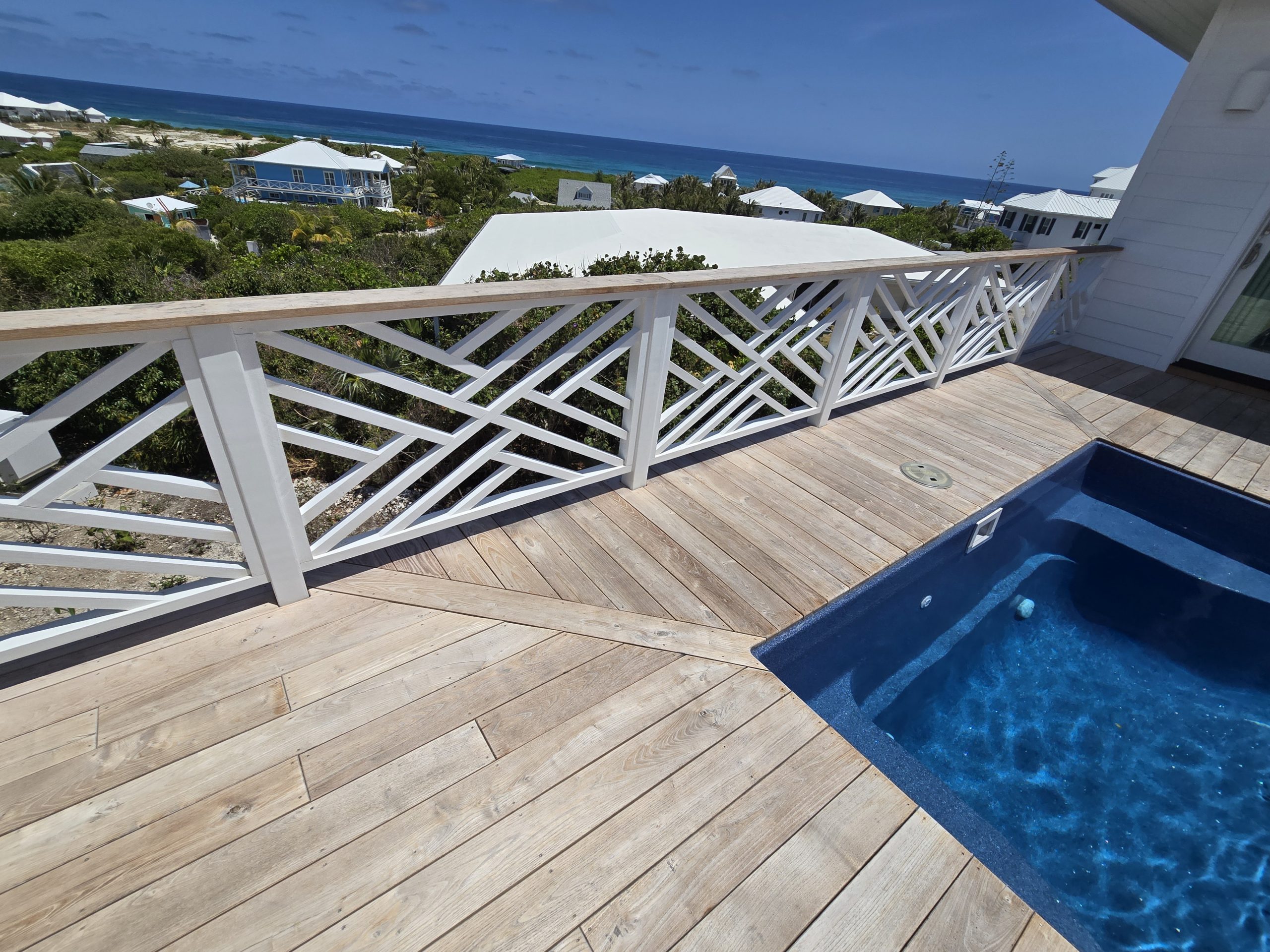
At Robi Decking, we’ve been supplying Black Locust decking for years and have customers with installations now approaching the 10–15 year mark. Across our project gallery — which spans a wide range of climate conditions, from coastal oceanfront decks and tropical island installations to rooftop terraces in cold-weather cities and park boardwalks in the northeastern U.S. — we have yet to see a properly installed Black Locust deck show structural deterioration from rot or decay.
The wear we do see over time: surface weathering (the silver-gray patina), minor checking on boards that weren’t properly allowed to acclimate, and fastener staining on projects that didn’t use stainless steel hardware. These are installation and maintenance issues, not wood failure.
What Actually Determines Lifespan
The lifespan of any deck — regardless of species — depends on four factors more than the wood itself:
1. Installation Quality
Proper fastening, correct gaps, pre-drilling, and structural framing all matter. A premium wood species won’t compensate for poor installation.
2. Fastener Choice
Stainless steel or high-quality coated fasteners are non-negotiable with Black Locust. Standard fasteners react with the wood’s tannins and cause staining and accelerated corrosion.
3. Moisture Management
Even the most rot-resistant species performs better when moisture doesn’t pool on or around the structure. Proper slope, drainage, and ventilation under the deck extend lifespan for any material.
4. Maintenance
Black Locust requires less maintenance than most decking materials — but not zero. An annual or biannual application of penetrating oil (if you want to maintain color) and occasional cleaning extends both the appearance and the functional lifespan of the deck. See our maintenance guide for specifics.
The Bottom Line
For a properly installed and minimally maintained Black Locust deck, 25–40 years is a reasonable real-world expectation in above-ground applications. With excellent installation and regular maintenance, longer lifespans are well-documented. This is comparable to high-end tropical hardwoods and dramatically longer than pressure-treated softwoods or composite materials. For a detailed cost comparison, see Black Locust vs. Treated Pine: 10-Year Cost Comparison.